Archive
BMW X4, ennesima diffusione del SUV

Una notizia di grande interesse arriva dalla casa automobilistica BMW, che proprio in questi giorni ha diffuso le prime ricostruzioni grafiche di quella che sarà la nuova BMW X4.
Questa nuova SUV di medie dimensioni è stata ufficializzata da BMW in seguito all’annuncio della Porsche Cajun, nata per attirare un’ampia fascia di mercato ed infastidire le attuali SUV in commercio di medie e piccole dimensioni.
Secondo quanto dichiarato da alcuni ingegneri BMW, la nuova X4 avrà uno styling facilmente distinguibile dalla X3 e dalla X1, così da poter suscitare un particolare interesse anche dagli amanti dell’innovatività e del design.
A quanto pare, il render appena presentato, anche se non ufficiale, presenta molte di quelle che saranno le caratteristiche di questa nuova opera automobilistica.
Per ora non sono state ancora rivelate informazioni sulla produzione e sul lancio della nuova BMW X4, che si crede sia prossimo, ovvero prima del periodo natalizio; vi terremo aggiornati sulle prossime novità.
Fonte: GoLook.it
Hotel La Mamounia, il sogno continua
Dopo la sua apertura nel 1923, il prestigioso La Mamounia ha attirato centinaia di VIP dalla popolarità hollywoodiana. Uno zoom su questo prestigioso e lussuosissimo Hôtel che ha riaperto le sue porte nel novembre 2009, dopo cinque anni di importanti restauri. Leggendaria, questa è la parola che meglio corrisponde all’Hôtel Mamounia. Da diversi decenni le sue mura accolgono regolarmente celebrità del mondo intereo e affascina chi non l’ha ancora visitata. La storia della Mamounia inizia nel XVIII° secolo, sotto il regno del Sultano alaouita Sidi Mohammed Ben Abdellah. Quando il figlio Mouylay Mamoun si sposo’, il monarca offri’ come regalo di nozze quei 7 ettari di giardini lussureggianti, nel cuore della città di Marrakech. Come vuole la tradizione il luogo venne battezzato Arsat El Mamounia, in onore del giovane e aitante principe. Quest’ultimo costrui’ un piccolo padiglione e prese l’abitudine di organizzare regolarmente dei “Nazahat”, una sorta di garden-party dell’epoca a luci rosse. Nel 1922 sotto il protettorato francese, la Compagnia dei Chemins de Fers (Ferrovie francesi) decise di costruire su quel giardino dalla flora ricca e divefsificata un Hôtel. La realizzazione del progetto venne delegata aHenry Prost e Antonio Marchisio, francese il primo e italiano il secondo, che decisero di fare della Mamounia un luogo internazionale, prevedendo un centinaio di camere, con un stile ispirato all’architettura marocchina tradizionale abbinata ad un tocco di Art Déco. Il concetto iniziale del progetto coincideva con il momento storico che mitizzava, nutrito da una certa letteratura orientalista, il sogno esotico dell’Africa. Operazione riuscitissima in quanto l’Hôtel e il suo Grand Casino attirarono una clientela straniera molto chic e gravida di avventure. Molte personalità come Colette, Edith Piaff, ilGenerale De Gaulle e ancora il primo minstro inglese Winston Churchill. Dopo molti anni il primo ministro inglese, fortemente toccato dall’ambiente marriakci, lascio’ l’Inghilterra durante lunghi periodi per trasferirsi a Marrakech. In una lettera datata 1935 inviata a sua moglie, Churchill descrisse l’Hôtel Mamounia come “meraviglioso” e carico di “phatos”. L’uomo politico passo molto tempo sulla sua terrazza dipingendo e contemplando la medina. Le sue tele sono state oggetto di culto per centinaia di galleristi sparsi in tutto il mondo e nel 2007 un suo dipinto, realizzato in Marocco, venne aggiudicato per 1 milione di dollari durante un asta di Sotheby. Un anno più tardi, una sua tela titolata “Tramonto sulle montagne dell’Atlas” venne venduta a 420.000 dollari a New York. L’identità del compratore ovviamente rimase sconosciuta ma rumors conducono alla persona di SAR Mohammed VI, re del Marocco. Anche Franklin Roosevelt soggiorno’ al Mamounia durante la Conferenza di Anfa del 1943. Il presidente americano segui’ il consiglio di Churchill che affermava che il luogo era “uno dei più belli del mondo intero”. Nello stesso periodo anche il Generale De Gaulle frequento’ l’Hôtel e la leggenda racconta che il direttore fu obbligato a confezionare, con la massima urgenza, un letto a misura di questo uomo imponente da non stare in un letto dalle misure standard. Dopo la Seconda Guerra Mondiale, la Mamounia divenne ancor più un luogo preso d’assalto dagli stranieri facoltosi e in primis dagli artisti di tutto il mondo. A partire dagli anni ’50, leggende del mondo del cinema come Charlie Chaplin, Marcello Mastroianni, Kirk Douglas o ancora Charlton Heston soggiornarono in questo mitico palazzo, dove avvennero’ anche alcuni importanti ciak della storia del cinema, come quello di Morocco con Marlene Dietrich o ancora L’uomo che sapeva troppo di Alfred Hitchock. Nel 1953 si ingrandi’ e divenne ancora più lussuoso. L’architetto decoratore André Paccard dono’ una nuova immagine alla struttura con una chiusura per lavori che duro’ circa nove mesi. Da quel restauro il Mamounia ne usci’ con 171 camere, 56 suite e 3 ville sparse nel lussureggiante giardino. Sino alla sua chiusura nel 2006, le stars del mondo intero non hanno mai smesso di recarsi a Marrakech e soggiornare nello storico palazzo. I Rolling Stones, Yves Saint Laurent, Johnny Hallyday, Sylvester Stallone, Nicole Kidman e Tom Cruise, Martin Scorzese, Angelina Jolie, Brad Pitt ancora Oliver Stone. La lista è infinita. La Mamounia ha un ala dedicata esclusivamente alla famiglia reale che realmente è stata poco frequentata, considerando che a Marrakech esiste uno dei Palazzi Reali più belli in assoluto del Reame. Oggi la Mamounia è risorta con un restauro che ha visto centinaia di maestranze locali lavorare per ben cinque anni al suo interno. Il risultato è sfarzoso, assolutamente indimenticabile e all’altezza del nome e della storia dell’Hôtel. Questo Palazzo continuerà a far rivivere i suoi sfarzi di altri tempi mostrando un immagine del Marocco lussuosa e nobile,. Un sito Internet è a disposizione per definire le prenotazioni online con relative tariffe.
Fonte: My Amazighen
Red Pop, pulsante di scatto dell’iPhone 4 di Beep Industries
L’assenza di un pulsante fisico costringe l’utente ad impugnare l’iPhone, in maniera non del tutto ergonomica per scattare le foto, col tasto touch sul display! Ecco però Red Pop, in arrivo dopo settembre, un’estensione, un accessorio intelligente per l’iPhone 4, progettato dal designer Brendan Dawes di Beep Industries. E’ semplice da installare e facile da utilizzare. Una volta collegato al connettore dock, Red Pop aggiungerà al vostro iPhone un consistente pulsante rosso attraverso il quale scattare foto in modo naturale, anche in sequenza, con meno tempi morti tra gli scatti, senza dover ricorrere al touchscreen. Questo accessorio rende l’iPhone più simile a una fotocamera. Red Pop prevede un’applicazione gratuita, scaricabile dall’App Store Apple. Sull’argomento Futurix aveva pubblicato WVIL Concept camera, la digitale del futuro.
Fonte: Futurix
Jaeger-LeCoultre Memovox Tribute to Deep Sea
There are some watches that leave an indelible trace on our collective memory because they have written a page in history. The Memovox Deep Sea, the first diver’s watch ever made by the Manufacture Jaeger-LeCoultre, undoubtedly belongs to the select circle of such milestone instruments. After presenting in 2008 two faithful interpretations of historical diver’s watches, the Memovox Tribute to Polaris 1965 and the Memovox Tribute to Polaris 1968, the Grande Maison in the Vallée de Joux is pursuing its journey through time and returning to the very roots of the diver’s watch by introducing a re-edition of the 1959 Memovox Deep Sea, logically named Memovox Tribute to Deep Sea. The distinctive characteristic of the original model lay in the fact that it was interpreted in two versions: one intended for European sports enthusiasts and the other for American divers. In homage to its rich past and to the delight of fine watchmaking connoisseurs, the Manufacture Jaeger-LeCoultre is unveiling a faithful limited-series re-edition of the two 1959 Memovox Deep Sea models.
Rebirth of an icon – The Memovox Tribute to Deep Sea faithfully replicates the original model, except in one respect: the stainless steel case has been slightly enlarged from 39.8 to 40.5 mm in order to match contemporary requirements – and wrists. The case-back carries the motif appearing on the 1959 watch, featuring a frogman surrounded by bubbles. And, as one would expect from a new creation paying homage to its illustrious predecessors, the Memovox Tribute to Deep Sea also comes in two versions, each bearing the appearance of one of the historical variations. While the European model features a matt black dial with luminescent hour-markers, its American counterpart is distinguished by a two-tone black/grey execution surrounded by an external ring comprising a scale with five-minute graduations and simply signed “LeCoultre”. The two versions offer the same range of functions: hours, minutes, central seconds and an alarm. A crown at 2 o’clock serves to wind and set the alarm, while another at 4 o’clock is used to wind the movement and set the time. Both models are driven by Memovox Calibre 956, an automatic movement incorporating the latest technological developments from the Manufacture and which has decisively demonstrated its reliability over the years. This descendant of the first manually-wound Memovox calibre beats at a rate of 28,800 vibrations per hour and is endowed with a 45-hour power reserve.
The first diver’s watch instrument – In the early 1950s, humankind was fervently dedicated to building a new world. Modern individuals were dynamic and intrepid, embodying the values of a future-oriented era and keen to set off on the discovery of new territories focusing on the unexplored heart of continents, the infinity of the cosmos, and the ocean depths. In 1957 the USSR launched the first artificial satellite of the Earth. A few months earlier, Jacques-Yves Cousteau and Louis Malle had unveiled the fascinating mysteries of underwater life in the film entitled The Silent World and which was acclaimed by critics at the Cannes Film Festival and subsequently by the public at large. Commander Cousteau’s passion was soon shared by a growing number of eager scuba diving fans, especially once the simultaneous invention of a revolutionary diving bottle fostered the spread of this promising young discipline. A new kind of sports enthusiast emerged, requiring instruments suited to the exercise of their recently developed passion and able to help them successfully undertake their adventurous missions below the sea.
In order to meet demand from American enthusiasts of this booming sport, Jaeger-LeCoultre launched a daring project in 1959 involving the development of a diver’s watch. This represented largely uncharted territory at the time, with no criteria stipulating the demands that should be met by this unprecedented category of timepieces, and almost 20 years were to elapse before the adoption of the NIHS norms applicable to diver’s watches. The watchmakers and technicians of the Manufacture immediately set to work and that same year presented a watch endowed with a degree of reliability and performances that were truly exceptional in that early period of underwater exploration. The Memovox Deep Sea was the world’s first diver’s watch equipped with an alarm function. Jaeger-LeCoultre engineers devoted the full measure of their inventive skills to transforming the alarm generally featured on Memovox watches into an acoustic signal designed to warn divers that it was time to begin their progressive ascent to the surface. In keeping with an essential principle consistently upheld by the Manufacture, functionality was already dedicated to serving security.
The new timepiece in both versions met with spectacular success on either side of the Atlantic. This iconic diver’s watch soon sold out and became a legend of which only a rare few collectors were able to glimpse the reality.
The Memovox tribute to Deep Sea is issued in two limited series: 959 reproducing the “Jaeger-LeCoultre Classique 1959” intended for the European market; and 359 inspired by the “LeCoultre Spécial Amérique 1959”. The last two digits of each edition echo the birth year of this legendary watch. And finally, driven by a determination to pay homage to one of the treasures of the company heritage, the watchmakers of the Manufacture have chosen to protect the dial of the Memovox Tribute to Deep Sea with a Plexiglas watch glass absolutely identical to that which equipped the historical models – exactly the kind of detail that connoisseurs will appreciate at its true worth.
Memovox Tribute to Deep Sea Replica of the “Jaeger-LeCoultre Classique 1959” –
Movement – Mechanical automatic movement, Jaeger-LeCoultre Calirbe 956, crafted, assembled and decorated by hand. 28,800 vibrations per hour. 23 jewels. 7.45 mm high. 268 parts. 45-hour power reserve.
Functions – Hours, minutes, central seconds and alarm.
Dial – Matt black with luminescent hour-markers. Alarm indication by a triangle with a luminescent centre.
Case – Steel. 40.5 mm in diameter. Convex plexiglas watch glass. Water-resistance – 10 bar.
Strap – Black leather with steel pin buckle.
Memovox Tribute to Deep Sea Replica of the “LeCoultre Spécial Amérique 1959” –
Movement – Mechanical automatic movement, Jaeger-LeCoultre Calibre 956, crafted, assembled and decorated by hand. 28,800 vibrations per hour. 23 jewels. 7.45 mm high. 268 parts. 45-hour power reserve.
Functions – Hours, minutes, central seconds and alarm.
Dial – Matt black and grey. Alarm indication by a triangle with a luminescent centre.
Case – Steel. 40.5 mm in diameter. Convex plexiglas watch glass. Water-resistance – 10 bar.
Strap – Black leather with steel pin buckle.
Source: Jaeger-LeCoultre
Fonte: Luxury & Fine Timepieces – Facebook
Audemars Piguet Millenary 4101, beauty and sophistication
Above and beyond the first impression of technical beauty and sophistication, this watch sparks natural curiosity. Is it a skeletonised watch? No, it did not involve openworking the movement parts to let the light through. So has the dial simply been pierced in order to reveal part of the mechanism? Not exactly, and nor was it just a matter of making openings in the mainplate so as to see through it. In any case, one thing is for sure: the watchmakers from Le Brassus have accomplished the feat of putting an object on your wrist that is more movement than watch.
They are thereby fulfilling the dream of all watchmaking devotees: extracting the fine mechanism from the cavity of its case to reveal it in all its splendour. This means there is no longer any need to turn the watch over to admire the movement through a sapphire crystal caseback, because the movement of the Millenary 4101 has actually been built to show itself face upwards. An intriguing notion that is sure to satisfy the curiosity of the most discerning aesthetes and connoisseurs! This fascinating spectacle is staged within the perimeter of a shaped case – and not just any case, but the voluptuous and sophisticated oval that makes the Millenary collection so truly unique.
Revealing the beating heart of the watch – Have you ever savoured the magic of certain homes in which the surrounding garden seems to be an integral part of the living areas, as if the foliage of the trees extended into the lounge, and the settee and coffee table appear to be set amongst the greenery? The Millenary 4101 exercises the same fascination as this holistic architecture. It blurs the borders between inside and outside. It overturns existing ideas, and in particular that which holds that the design involves the exterior of the watch – dial, case and wristband – and thus its outer garment, while the inside is essentially functional. Things are very different on this model, in which the inside and outside form a seamless whole merging functionality and design. In terms of development and production, this naturally implies intense cooperation between the teams at work, resulting in two highly original models, one in stainless steel with a black crocodile leather strap, and the other in pink gold with a brown crocodile leather strap, and both masterfully combining form and content.
Calibre 4101, entirely designed, developed and produced in-house, was built in such a way that the elements normally concealed on the back are now visible from the front. The regulating organ – composed of the balance, lever and escapement – has been reworked in order to meet this goal. It is located at 9 o’clock and offers a truly eye-catching sight. Its variable-inertia balance asserts a powerful presence with its eight inertia-blocks, its golden colour and the distinctive aesthetic of its cross-through bridge. The discerning eye will even detect the lever and the escape-wheel.
Moreover, no less than 12 bridges have been cleverly arranged on the surface of the movement. In addition to their functional role, which consists in holding the various parts in place, they also serve as attractive design elements, including by tracing three beautiful parallel curves on the dial side. Their decorative motifs – horizontal Côtes de Genève, circular graining; and snailing on the “trottoirs” – play with the different movement levels to accentuate the contrasts and depth effects. The screws on the left-hand side of the dial underscore the oval shape of the case and create a more technical and richer overall impression. The same goes for the hemispherical convex and particularly sparkling jewels punctuating the 10, 11 and 12 o’clock numerals on the dial.
In this manner, various elements relating to the movement structure and its functional role in fact play a premier role in the overall aesthetic appeal of the watch. They merge as one with the signature characteristics of the Millenary collection represented by the oval case subtly accentuated by the contrast between the brushed case middle and the polished bezel, as well as the offset subdial with Roman numerals. The watch is thus viewed as a sophisticated whole distinguished by its three-dimensional, high-tech design. The Millenary 4101 thereby pursues an exploratory process that began several years ago and has been exemplified through models such as the Tradition d’Excellence N°5, the Millenary with deadbeat seconds and the Millenary MC 12.
Reliability, timing precision and finishing quality – The oval Calibre 4101, as we have seen, is distinguished by an ingenious structural approach that turns the parts upside down and plays a key role in the overall design of the watch. Nonetheless, these visual qualities must not eclipse its excellent reliability. The heart of the movement is a variable-inertia balance with eight white gold inertia-weights that ensures improved long-term rating stability. Equipped with a Breguet balance-spring, it beats at an oscillation frequency of 4 Hz, meaning 28,800 vibrations per hour. This oscillation frequency, along with the higher inertia of the balance, improves the timing precision and also makes the regulating organ less sensitive to external disturbing factors. The cross-through balance-bridge ensures improved shock resistance due to the fact that it is secured not just on one side, but on either side of the mainplate.
Winding is ensured by a 22-carat gold oscillating weight mounted on ceramic ball bearings. The reverser mechanism ensuring bidirectional winding is also composed of a ceramic ball-bearing system. An effective antidote to wear and also useful in avoiding any locking, the system is conducive to optimal winding speed. The mainspring thus wound is able to release its energy in a more regular manner and to positively influence rating precision.
Hand-decorated and assembled in the Le Brassus workshops, Calibre 4101 boasts exceptionally high-quality execution and finishing. The movement of the steel version has an elegantly understated colour achieved by an anthracite galvanic treatment, while that of the pink gold version is rhodiumed and gilded. The bridges are meticulously bevelled and polished so as to display only clean-cut, gleaming edges. The jewel sinks are diamond-polished. The wheels have bevelled spokes and diamond-polished sinks. Even the screw rim and slots are bevelled. The mainplate is decorated on both sides: Côtes de Genève on the front and circular-graining in two different sizes on the back in order to create greater contrast and depth effects. The bridges on the dial side feature horizontal Côtes de Genève, snailing and circular graining, while the bridges on the back are distinguished by circular Côtes de Genève, snailing and circular graining. Finally, the 22-carat gold oscillating weight is adorned with the Audemars and Piguet family crests and the AP monogram.
Movement – Proprietary selfwinding Calibre 4101. Overall dimensions – (width/length: 37.25 x 32.90 mm). Casing diameter – (width/length: 36.75 x 32 mm). Thickness: 7.46 mm. 34 jewels. 253 parts. Bidirectional winding 22-carat gold oscillating weight mounted on ceramic ball bearings. 60-hour power reserve. Cadence of the balance: 28,800 vibrations per hour (4 Hz). Variable-inertia balance with eight inertia-blocks and Breguet overcoil balance-spring. Screw-down mobile balance-spring stud-holder.
Finishing – All parts decorated by hand; mainplate adorned with horizontal Côtes de Genève on the front and circular-grained on the back; bridges rhodiumed, bevelled, snailed and adorned with horizontal and circular Côtes de Genève and with circular graining: Diamond-polished jewel sinks; diamond-polished countersinks and bevelled wheel spokes; bevelled screw rims and slots. AP monogram as well as Audemars and Piguet family crests engraved on the oscillating weight.
Functions – Hours and minutes. Small seconds.
Cases – Stainless steel or 18-carat pink gold. Dimensions – (width/length: 47 x 42 mm). Thickness 13 mm. Sapphire crystal caseback.
Dials – Directly fixed to the bridges. Black and anthracite with applied pink gold Roman numerals. Pink gold hands.
Water resistance – 20 m.
Straps – Hand-sewn black or brown crocodile leather with large square scales, secured by an AP folding clasp in stainless steel or 18-carat pink gold.
Source: Audemars Piguet
Fonte: Luxury & Fine Timepieces – Facebook
Suzuki Hayabusa Limited Edition for Pepsi, moto guidata di Jennifer Lopez

E’ ora in vendita al prezzo di circa 32 mila dollari; stiamo parlando della splendida Suzuki Hayabusa Limited Edition for Pepsi guidata dalla bellissima Jennifer Lopez nello spot della celebre bevanda.
La moto, immatricolata nel 2004 e con soli 160 chilometri percorsi, è molto vistosa grazie alla speciale verniciatura con illuminazione a LED sottoscocca che la rende una delle moto più esclusive in circolazione.
La moto in questione è divenuta famosa in tv per essere stata guidata da Jennifer Lopez e Beyoncè, due bellissime pop star; la moto guidata da quest’ultima è già stata venduta per lo stesso prezzo qualche anno fa.
Per ora, siamo in attesa di sapere chi si aggiudicherà questa belva a due ruote guidata dalla bellissima artista, considerata attualmente come una delle donne più desiderate dello show business in ambito mondiale.
Fonte: GoLook.it
Asus IRIS, dispositivo concept di nuova generazione
Immaginare di svegliarvi circondati dal cinguettio di uccelli virtuali attorno al vostro capezzale, generati da un micro video-proiettore 3D posto sul proprio comodino; immaginate altresì di scorgere alla medesima maniera il colore azzurro del cielo proiettato sul soffitto provvisto della stessa temperatura del giorno…
L’urbanizzazione tende a ridurre gli spazi messi a disposizione dalla natura, quindi si é costretti ad adattarsi ai nuovi ambienti medianti differenti dispositivi digitali, quali lo smartphone, il portatile, il tablet e l’e-book.
Sulla base dell’impiego dei diversi dispositivi utili durante tutto l’arco di una giornata, il Design Center Asus ha realizzato un concept minimalista davvero affascinate di nuova generazione, IRIS (Inspirational Research for Immersive Space), in grado di rivoluzionare i vari dispositivi e renderli unici in modo tale da essere utilizzato come sveglia, orologio, smartphone, ma anche tablet all’occorrenza o simpatico device ludico per giocare. E’ possibile adattare le proprie necessità mediante l’aumento o la riduzione del display. Asus IRIS é un concept innovativo che fa sognare.
Marius Creati
Ferrari 250 GTO, scultura in oro dall’artista svizzero Dante Rubli

In altri casi abbiamo parlato di vere e proprie automobili in oro ma, in questo caso, parliamo di una semplice ma allo stesso tempo esclusiva riproduzione: una scultura in oro della Ferrari 250 GTO realizzata dall’artista svizzero Dante.
L’artista è molto conosciuto in Svizzera per le sue opere caratterizzate dall’uso di metalli preziosi; ancora una volta ha stupito il pubblico presentando una raffinata scultura della storica Ferrari 250 GTO venuta fuori da un blocco di oro giallo 24 carati.
L’opera di alto pregio sarà presentata ufficialmente al pubblico nel corso del prossimo Concorso d’Eleganza di Pebble Beach; secondo quanto rivelato dall’artista, all’evento saranno messe in mostra altre sculture automobilistiche prodotte da lui in passato.
Fonte: GoLook.it
Concord C2, cronografo in stile neo-black urbano

Una nuova opera di casa Concord, profondamente ispirata allo stile neo-black urbano, perfettamente espresso nei più innovativi yacht di lusso o nelle auto sportive di una certa aggressività, apprezzate da una fascia di mercato all’avanguardia, particolarmente attenta al design.
Stiamo parlando del nuovo cronografo Concord C2, concepito con un’estetica profondamente futuristica, ma con linee che calcano la firma della marca, ammirata nel mondo per la sua innovatività.
Il cinturino alla cassa, interamente in acciaio trattato PVD, è attaccato saldamente tramite tubolari orizzontali.
La cassa è leggermente più sottile degli altri modelli, con un diametro da 43 mm e vetro zaffiro spesso 2 mm; si possono notare le viti a vista e la fibbia déployante a tre lame. Il fondello, inoltre, garantisce resistenza ed impermeabilità fino a 100 metri (10 atmosfere).
Per ciò che concerne il movimento, parliamo di un meccanico ad alta precisione con 28 rubini che compie 28.800 alternanze in un’ora, elaborando un’ampia gamma di utili indicazioni; tra queste sono presenti la data e le funzioni del cronografo, perfettamente visibili dal quadrante a tre settori. Quest’ultimo è caratterizzato da una raffinata finitura con sabbiatura e granitura circolare
Il tutto è completato dalle lancette e dagli indici luminosi disposti in maniera precisa all’interno della ghiera, rispettando i canoni dello stile Concord.
Il Concord C2 in versione con dettagli rossi, è caratterizzato da un vistoso dischetto rotante situato a ore tre con un indice cremisi; il colore è ripreso da altri particolari, tra cui il cinturino in gomma vulcanizzata caratterizzato da piccole linee parallele interne di colore rosso.
Le referenze del nuovo Concord C2, sono rispettivamente 0320138 per la versione con dettagli neri e 0320141 per la versione con dettagli rossi.
Per altre informazioni, basta visitare il sito concord.ch
Fonte: GoLook.it
Smolten Mirror, specchio screpolato da Cmmnwlth Design Studio
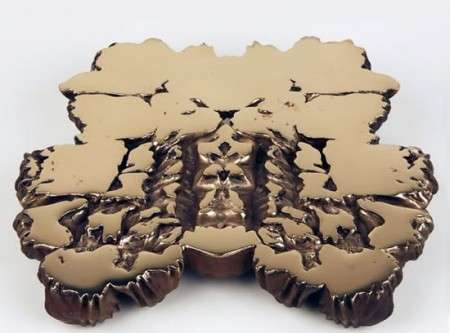
Per molte persone uno specchio rotto può portare sfortuna, ma in questo caso avere uno specchio rotto in casa è una cosa non proprio accessibile a tutti.
Parliamo dello specchio di design dal nome Smolten Mirror realizzato dallo Cmmnwlth Design Studio di New York; questo particolare oggetto d’arredo è stato concepito in modo da sembrare già crepato, composto materiali solidi come il bronzo e il silicio.
Questo pezzo d’arte fa parte della collezione Design Year 2011 ed è prodotto in una tiratura limitata di soli 3 esemplari in vendita al prezzo di circa 4 mila dollari ciascuno.
Per chi desiderasse aggiudicarsi uno dei tre “pezzi d’arte” in questione, è possibile contattare, anche tramite web, la galleria Matter di New York.
Fonte: GoLook.it



 LA PROMENADE Cult
- PESCARA 2027: IL TRADIMENTO DELLA RAGIONE STOICA E L’INGANNO DI UN’IDENTITÀ DIMEZZATA di Marius Creati
- Peppino di Capri, muore uno dei grandi protagonisti della canzone italiana
- Valentino Garavani, muore l’imperatore della moda
- Crans-Montana, lutto oltre ogni possibile apparenza
- Italexit Per l’Italia Abruzzo – Marius Creati sostiene la famiglia nel bosco
- Giorgio Armani, muore l’ultimo re della moda internazionale
- Emilio Fede, muore l’ex direttore del Tg4
- Scuola.Zero – Progetto di Educazione Parentale, Francavilla al Mare (CH)
- Pippo Baudo, muore il re della tv italiana simbolo di Sanremo
- Ozzy Osbourne, muore il famoso frontman dei Black Sabbath

La Promenade du Temps
- Sedia neo barocca degli anni 50, un classico estemporaneo
- MERRY CHRISTMAS & HAPPY NEW YEAR 2025
- Allegra cornice artigianale con specchio fumé anticato d’antan
- Lampadario vintage in ottone e legno anni ’50 in stile neo vittoriano glamour
- “Una notte sul Titanic sul fondo dell’oceano…” incantevole letto d’antan anni ’40 in uno stile shabby materico tra profondo blu e tramonto solare
- Euforie di angioletti di gesso…
- Scudo con cranio di giovane cervo rosso, originale esempio di tassidermia in onore a Cernunnos
- Specchio impero anni ’40 su consolle vintage anni ’50/’60… en un ensemble encroyable!
- Putto decorativo tridimensionale très jolie in resina
- Testa di David, rivisitazione d’antan di un classico sempiterno

Les Fleurs de La Promenade
- “Quarantena” di Marius Creati
- Ciclo Corsini, estratto di poesie di Marius Creati
- “Padre mio” di Marius Creati
- Fashion Couture e Seduzione, disegni di moda di Marius Creati
- Fashion Couture e Seduzione, disegni di moda di Marius Creati
- “Segni”, poesia di Marius Creati
- Fashion Couture e Seduzione, disegni di moda di Marius Creati
- Fashion Couture e Seduzione, disegni di moda di Marius Creati
- Aforisma di Marius Creati
- Fashion Couture e Seduzione, disegni di moda di Marius Creati

LA PROMENADE Vip
- Crans-Montana, lutto oltre ogni possibile apparenza
- MERRY CHRISTMAS & HAPPY NEW YEAR 2025
- MERRY CHRISTMAS & HAPPY NEW YEAR 2023
- Ilary Blasi e Francesco Totti, amori in dissolvenza sinonimo di società liquida
- Madonna… il suo catalogo non è in vendita!
- Merry Christmas & Happy New Year 2021
- Robin Williams, svelata causa di morte del celebre attore
- Naomi Campbell, annuncio arrivo della sua prima figlia
- Merry Christmas & Happy New Year 2020
- Stella McCartney x Taylor Swif, capsule in arrivo con l’album Lover


MONDORARO
- Serbia, gli studenti sconfiggono Vučić e riempiono le piazze: il cambiamento dell’Europa comincia proprio dai giovani
- Ucraina, il Papa prega, Melania fa il miracolo e Putin incassa: alla Casa Bianca anche Dio deve chiedere il permesso a Trump
- Florida, studenti puniti per una protesta silenziosa contro l’ICE: la giustizia interviene a difesa della libertà di espressione
- Luna del Cacciatore, il plenilunio del 26 ottobre illumina il cielo: lo spettacolo continua
- Cortei e fermi preventivi, i penalisti contro la stretta sulla sicurezza: «A rischio i principi costituzionali»
- Brasile, Lula batte Flávio Bolsonaro e conquista il quarto mandato presidenziale
- Caffè, cambiano le abitudini degli italiani: cresce il consumo di decaffeinato
- Green jobs, il futuro del lavoro è sostenibile: nuove professioni e opportunità per l’Italia
- Youssef Siher, il terrorismo e la presunzione di innocenza: quando la propaganda rischia di sostituirsi alla giustizia?
- OROSCOPO DELLA SETTIMANA: Dal 26 ottobre al 1 novembre


La Promenade by Marius Creati is licensed under a Creative Commons Attribuzione - Non opere derivate 3.0 Unported License.
Based on a work at lapromenademag.com.
Permissions beyond the scope of this license may be available at http://lapromenadenet.wordpress.com/la-promenade-network/.